Tiscali: The Mountain Village No One Sees From Below
In the middle of the Supramonte, hidden inside a collapsed cave system, lie the remains of a nuragic village – completely invisible from outside and still not fully explained today.
A village in a hole in the mountain
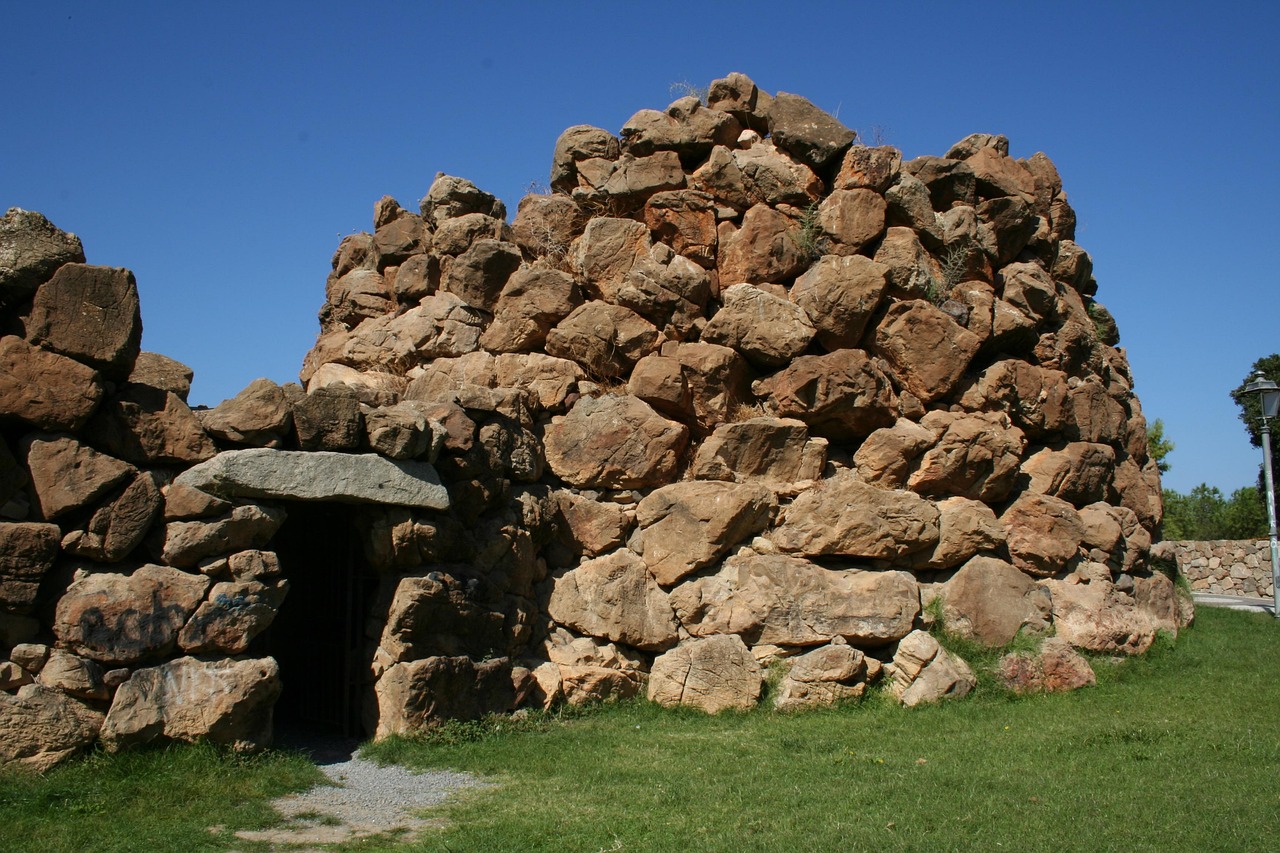
Tiscali isn't a ruin on a hill, but sits inside a doline: a karst sinkhole formed when the roof of an underground cave system collapses. Around 40 circular stone huts hug the inner walls of this natural crater landscape between the Supramonte di Oliena and the Supramonte di Dorgali – surrounded by a small microforest of holm oaks and mastic shrubs that creates its own cooler microclimate within the basin.
Inhabited into the Iron Age
Archaeological finds date the settlement to roughly the 15th to 8th century BC – Tiscali was thus still inhabited when the nuraghic culture was already declining elsewhere on the island. Why anyone would build in such an inaccessible spot is still debated among archaeologists: did the doline serve as a refuge from invading Phoenicians and later Romans, as a remote cult site, or simply as an especially protected settlement? Clear evidence for any one theory is lacking.
Rediscovered only in the 19th century
Despite its location right in the heart of the Supramonte, Tiscali was forgotten for centuries and only systematically investigated in 1885 by a French archaeologist. For a long time, the doline and surrounding caves served shepherds as shelter – one reason many of the original finds had already disappeared by the time the first scientific exploration began.
How to get there today
The climb usually starts from Valle di Lanaitto or Su Gologone and takes roughly three to five hours round trip depending on the route – with no signage at the doline itself, so the site's hidden character has survived to this day. More on the exact route and other hikes in the Supramonte in our hiking article.