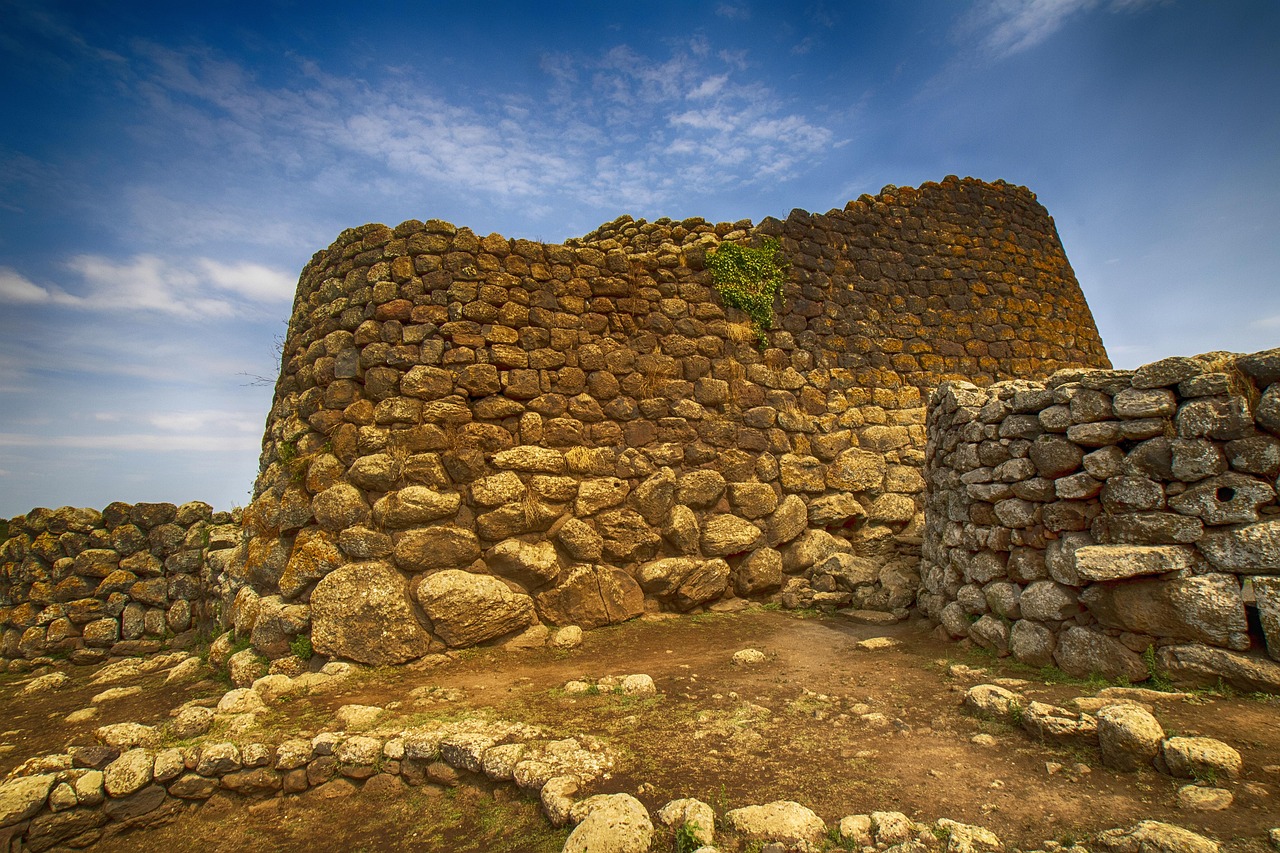
Nuraghi and the History of Sardinia
Few structures are as closely tied to Sardinia as the nuraghe: a cone-shaped Bronze Age stone tower, of which over 7,000 survive on the island – there were likely once more than 10,000.
What is a nuraghe?
A nuraghe is a round tower built from large, mostly unhewn stone blocks, often with a chamber that tapers inward like a dome (similar to Greek tholos tombs). The first "proto-nuraghi" appeared around 2,000 BC, with the major building wave lasting until about 1,200 BC; many existing structures were later expanded into complex fortified towers with several secondary towers.
What were they for?
Their exact function is still debated – theories include residential towers, defensive structures, cult sites, or a combination of all three. What's certain: the nuraghic culture was Sardinia's defining civilization during the Bronze and early Iron Age, with its own craftsmanship, its own bronze figurines ("bronzetti"), and trade links reaching into the eastern Mediterranean.
The most important sites to visit
- Su Nuraxi di Barumini – the most famous and best-developed site, a UNESCO World Heritage Site.
- Nuraghe Losa near Abbasanta – well preserved, with an interior you can walk through.
- Nuraghe Santu Antine near Torralba – one of the island's largest nuraghi.
- Tiscali in the Supramonte – a mountain settlement spectacularly hidden inside a doline (see our hiking article).
After that: Phoenicians, Carthaginians, Romans
From around the 8th century BC, Phoenician traders established coastal outposts (including Nora and Tharros), followed by Carthaginian and eventually Roman rule from 238 BC. These layers of Sardinian history can still be traced today at many of the island's excavation sites.